
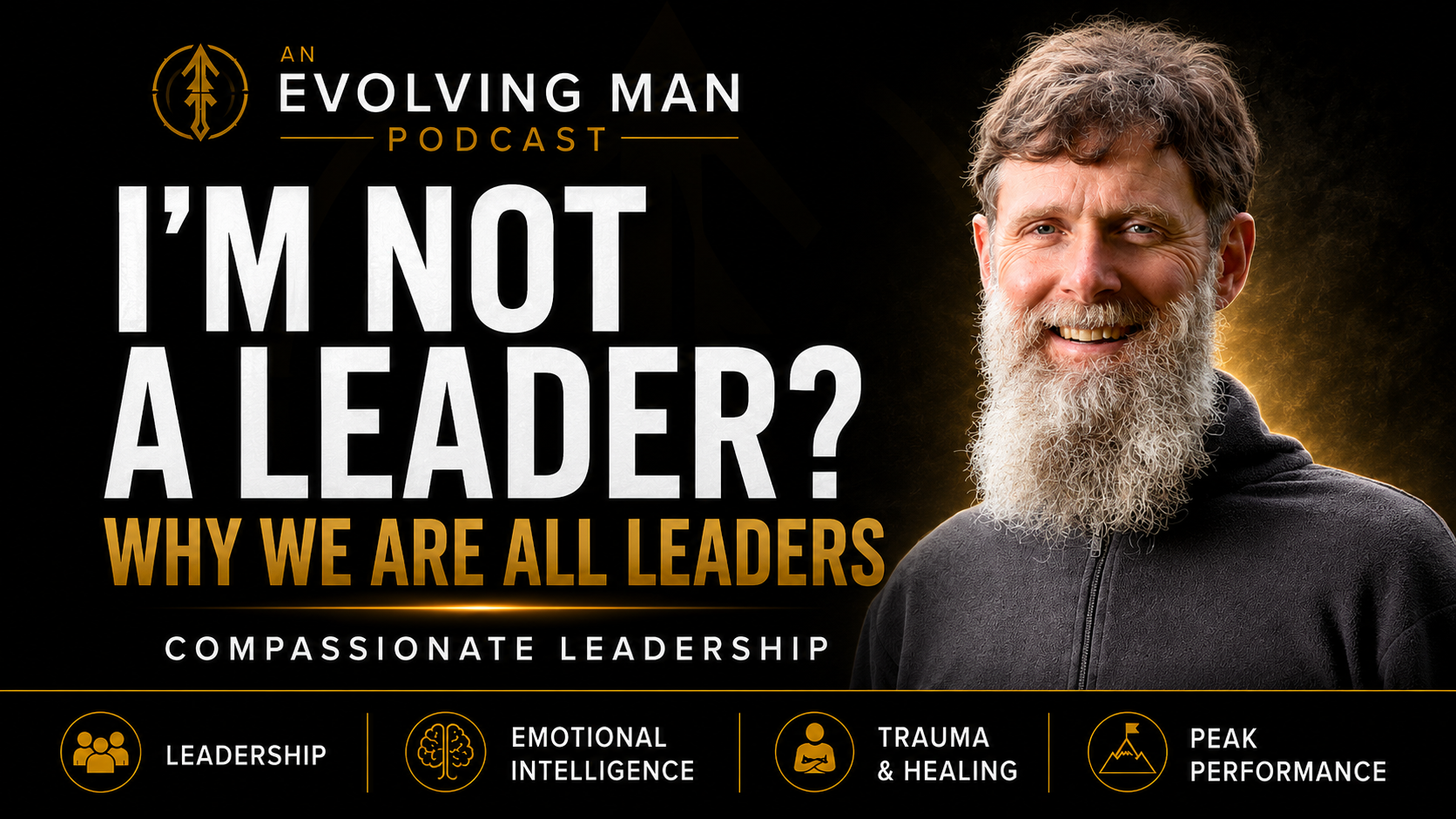
One of the phrases we hear quite often at Compassionate Leaders Global is:
“I’m not a leader.”
People say this because they do not have a formal title.
They are not a CEO.
They are not a senior manager.
They are not running a large organisation.
They do not see themselves as powerful, confident or naturally authoritative.
But this raises an important question.
What do we actually mean by leadership?
Because if leadership only means having a title, giving orders or sitting at the top of a hierarchy, then many people will understandably say, “I’m not a leader.”
But that is not the kind of leadership the world now needs.
Leadership Is Not Only a Title
In Learn How to Lead to Win, retired US Navy Admiral Mike Manazir writes:
“If you are a parent, you are a leader.
If colleagues come to you for advice, you are a leader.
If you teach, coach, counsel or support others, you are a leader.
If you aspire to make a meaningful impact on the world, you are a leader.”
This is a much broader, deeper and more human understanding of leadership.
Leadership is not simply a position.
It is influence.
It is presence.
It is responsibility.
It is how we affect the people around us.
We Are All Leading Somewhere
Every day, we influence others.
We influence our children.
Our colleagues.
Our friends.
Our families.
Our communities.
Our clients.
Sometimes we do this consciously.
Sometimes unconsciously.
The question is not whether we are leading.
The question is:
How are we leading?
Are we leading through fear?
Through control?
Through emotional avoidance?
Through people-pleasing?
Through reactivity?
Or are we learning to lead with awareness, compassion, courage and emotional intelligence?
The Old Model: Command and Control
Many people reject the word “leader” because they associate it with command and control.
They imagine a leader as someone who is dominant, forceful, certain and in charge.
Do as I say.
Follow orders.
Do not question.
Do not show weakness.
This model has shaped much of British leadership for generations.
But it is no longer enough.
In a complex, fast-changing world, leadership based purely on authority is increasingly ineffective.
People do not simply want to be managed.
They want to feel trusted.
They want meaning.
They want psychological safety.
They want to be heard.
They want to contribute.
They want to grow.
The New Model: Human-Centred Leadership
Mike Manazir describes the importance of human-centred leadership.
This is leadership that genuinely values the people it touches.
It does not see people as resources to be extracted from.
It sees them as human beings to be developed, supported and empowered.
This is very close to what we mean by compassionate leadership.
Compassionate leadership is not soft.
It is not weak.
It is not about avoiding accountability.
It is about leading in a way that sees the whole person.
It asks:
What does this person need in order to grow?
How can I create safety?
How can I build trust?
How can I help others become more fully themselves?
How can I serve?
Creating Leaders, Not Followers
One of the differences between command-and-control leadership and compassionate leadership is this:
Command-and-control leadership creates followers.
Compassionate leadership creates leaders.
When a leader holds all the power, makes every decision and requires others to simply comply, the people around them do not grow.
They become dependent.
They wait to be told what to do.
They may become compliant, resentful or disengaged.
But when a leader empowers others, something different happens.
People begin to step forward.
They develop confidence.
They take responsibility.
They find their voice.
They become leaders themselves.
This is one of the signs of mature leadership.
It does not hoard power.
It develops power in others.
John Maxwell’s Five Levels of Leadership
John C. Maxwell describes five levels of leadership.
The first level is positional leadership.
People follow because they have to.
You have the title.
You have the role.
You have the authority.
But this is only the beginning.
A deeper level is relational leadership.
People follow because they trust you.
Because they know you.
Because they feel respected by you.
From there, leadership becomes about productivity, developing others and ultimately creating leaders who themselves create leaders.
This is the shift we need.
From position to relationship.
From authority to trust.
From control to service.
Psychological Safety and Emotional Intelligence
Gareth Southgate writes about being struck by how much emphasis the army places on emotional intelligence and psychological safety.
This is significant.
Even in environments traditionally associated with command, discipline and hierarchy, there is increasing recognition that great leadership requires emotional intelligence.
Psychological safety matters.
People need to feel safe enough to speak honestly.
Safe enough to ask questions.
Safe enough to make mistakes and learn.
Safe enough to challenge.
Safe enough to bring their full intelligence into the room.
This is not a luxury.
It is essential to healthy, high-performing teams.
Leadership Begins With Self-Leadership
Before we lead others, we must learn to lead ourselves.
This means becoming aware of our triggers.
Our patterns.
Our fears.
Our need for approval.
Our discomfort with conflict.
Our desire to control.
Our tendency to withdraw.
Our resistance to responsibility.
Self-leadership is the foundation of compassionate leadership.
Because the way we relate to ourselves shapes the way we relate to others.
If we are harsh with ourselves, we often become harsh with others.
If we cannot listen inwardly, we may struggle to listen outwardly.
If we cannot regulate ourselves, we may create dysregulation around us.
You Are a Leader
You may not have the title.
You may not have the role.
You may not see yourself as a traditional leader.
But if your actions influence others, you are leading.
If people come to you for support, you are leading.
If you care about making a difference, you are leading.
If you want to create a more compassionate, emotionally intelligent world, you are leading.
The invitation is not to become someone else’s idea of a leader.
The invitation is to lead in your own way.
With your own gifts.
Your own heart.
Your own integrity.
Your own humanity.
The Compassionate Leader Pathway
The Compassionate Leader Pathway is for people who want to develop this kind of leadership.
Not command and control.
Not performance without heart.
Not leadership as domination.
But leadership as service.
Leadership as emotional intelligence.
Leadership as responsibility.
Leadership as compassion in action.
Our next cohort begins in September, and registration closes at the end of this week.
Find out more here:
https://compassionateleadersglobal.com/the-compassionate-leader-pathway-course/
Because leadership is not only about where you sit in the hierarchy.
It is about how you show up in the world.


